 Quantum Hub
01
STARK proving
Built on hashes
STARK proving relies on hash functions rather than the elliptic-curve assumptions threatened by Shor’s algorithm. Starknet does not need to replace its proving system as part of its post-quantum migration.

Architecture
StarkWare created STARKs and develops S-two, the production prover securing Starknet. Starknet's native account abstraction lets accounts adopt new signature schemes.
The throughline
Cryptographic agility lets a system change cryptography without redesigning the whole stack. Starknet’s two architectural advantages for post-quantum migration are STARK proving and native account abstraction.
01
Built on hashes
STARK proving relies on hash functions rather than the elliptic-curve assumptions threatened by Shor’s algorithm. Starknet does not need to replace its proving system as part of its post-quantum migration.
02
Signatures can change
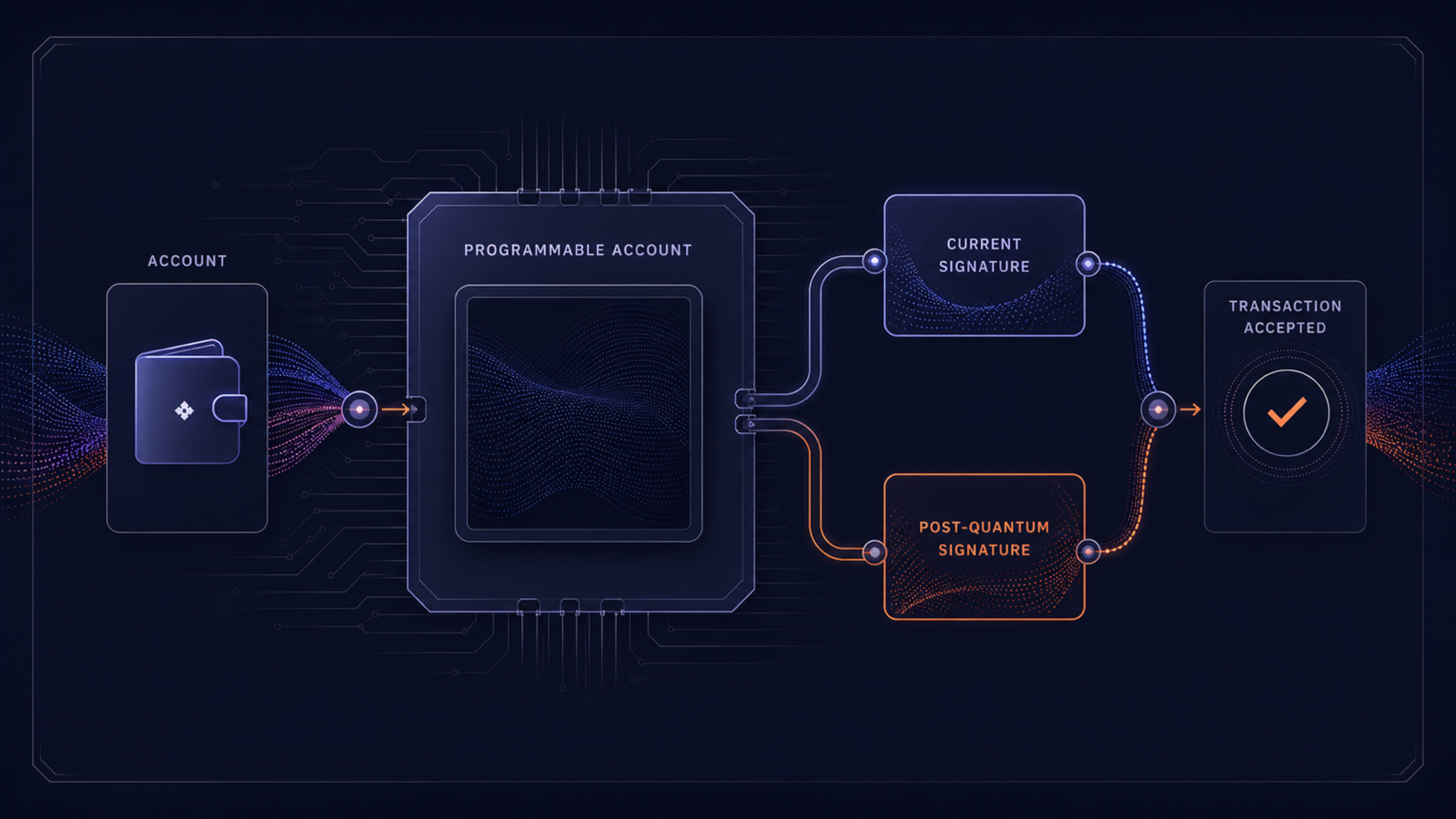
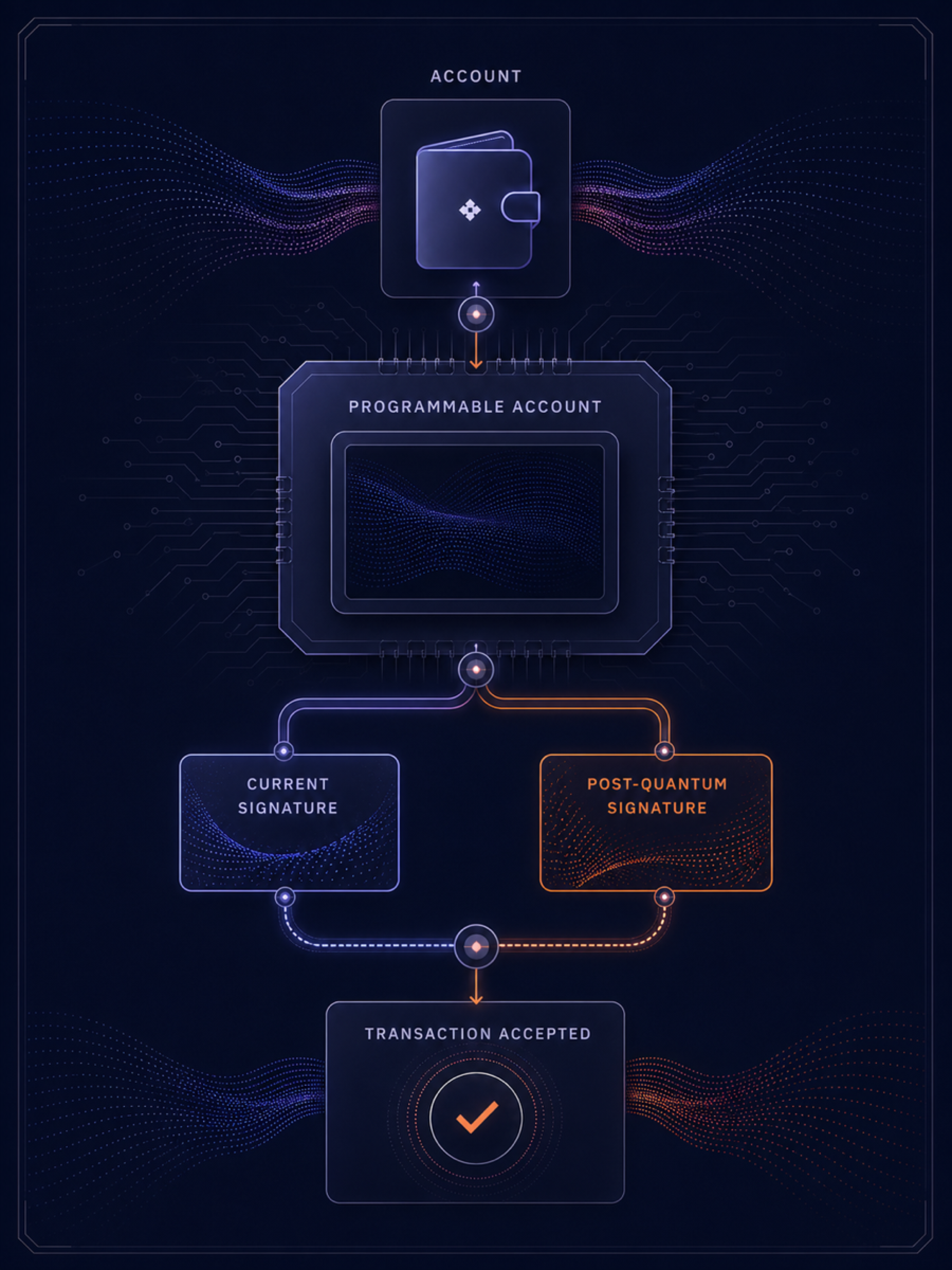
Programmable Starknet accounts can use post-quantum signature verifiers today without a protocol-wide hard fork.
STARK proving
At the proving layer, yes. STARKs use hash-based commitments and do not rely on elliptic-curve hardness. Shor's algorithm targets the elliptic-curve assumptions used by common signatures. STARK proving uses a different construction.
StarkWare created STARKs, and co-founder Eli Ben-Sasson co-authored the 2018 STARK paper. S-two now powers Starknet's production proving stack.
Built on hashes
STARK proving relies on collision-resistant hash functions rather than elliptic-curve hardness. This keeps the proving layer outside the assumptions threatened by Shor's algorithm.
Proves heavy computation
Post-quantum signature checks cost more than common schemes. STARK proving gives Starknet a way to absorb that extra computation.
No trusted setup
STARKs do not require secret setup material. No party needs to create or safeguard hidden parameters.
Account validation
Starknet launched with native account abstraction. Each account is a programmable contract that can define its own signature checks. A new account implementation can adopt a post-quantum signature verifier without a protocol-wide change.
Last updated: 26 August 2026.